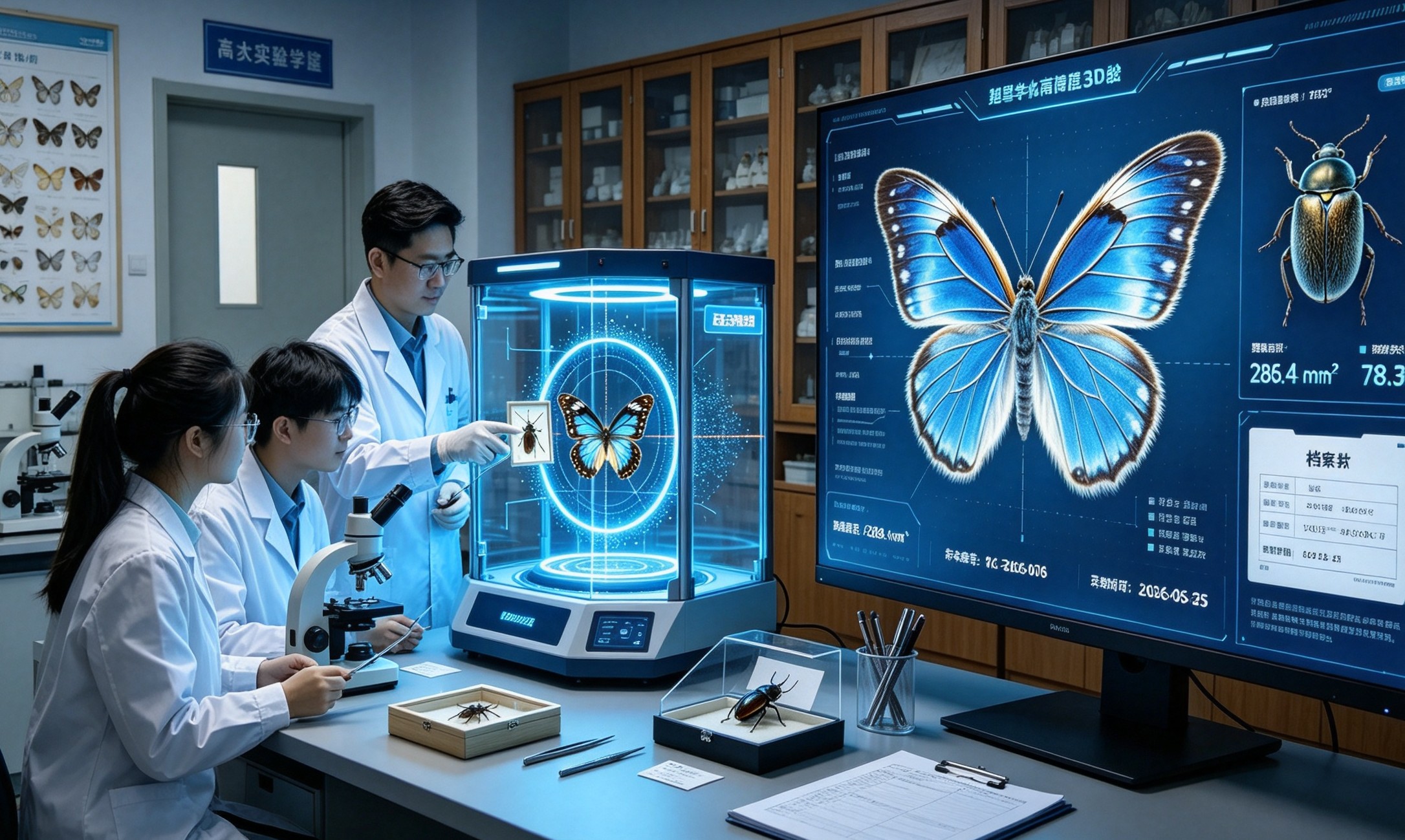
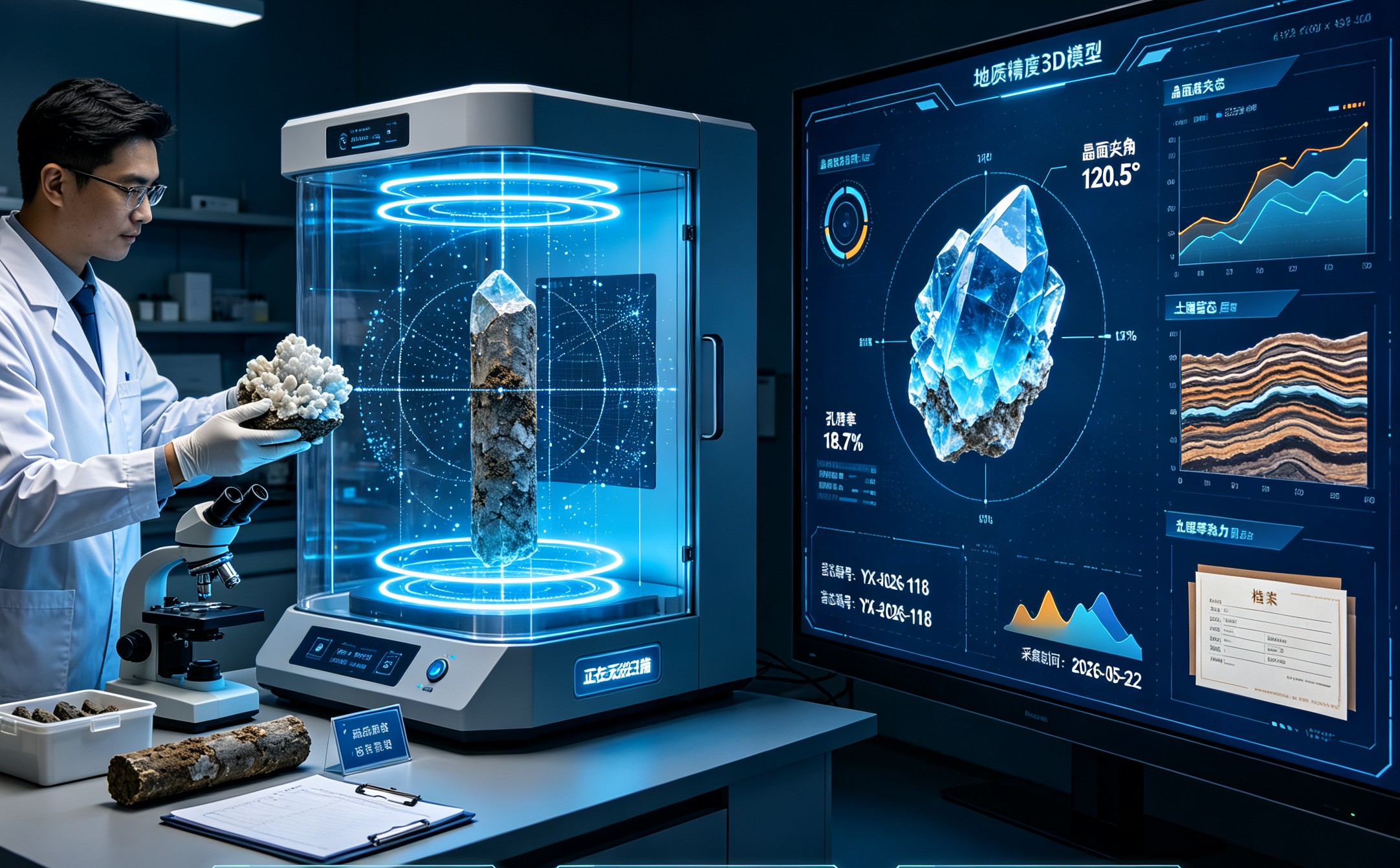
Tuojie Cloud Map fully automatic mineral-specific scanning and collection solution
1. Hardware adaptation for all categories of geological specimens
- Micro-scanning chamber: tiny single crystals, gemstones, mineral thin sections, fine- soil samples;
- Standard scanning chamber: crystal cluster ores, medium-sized rock blocks, soil profile specimens;
- Large-scale floor chamber: complete exploration rock cores, largescale stratigraphic ores, mineral vein specimens.
The entire machine is equipped with a spectral ring soft light system macro micron-level optical module multi-axis intelligent gimbal, providing enclosed automatic scanning.
2. Zero-damage fully automatic collection process
1. Staff place the mineral/rock core steadily on the flexible anti-vibration bracket, without need for flipping or spraying any chemicals;
2. One-click startup, the device autonomously rotates 360° and performs multi-angle layered imaging, fully capturing the details of crystal faces, fractures, soil bedding, and particle textures;
3. Fully unmanned operation, 24/7 continuous batch processing, with specimen collection taking only minutes per piece;


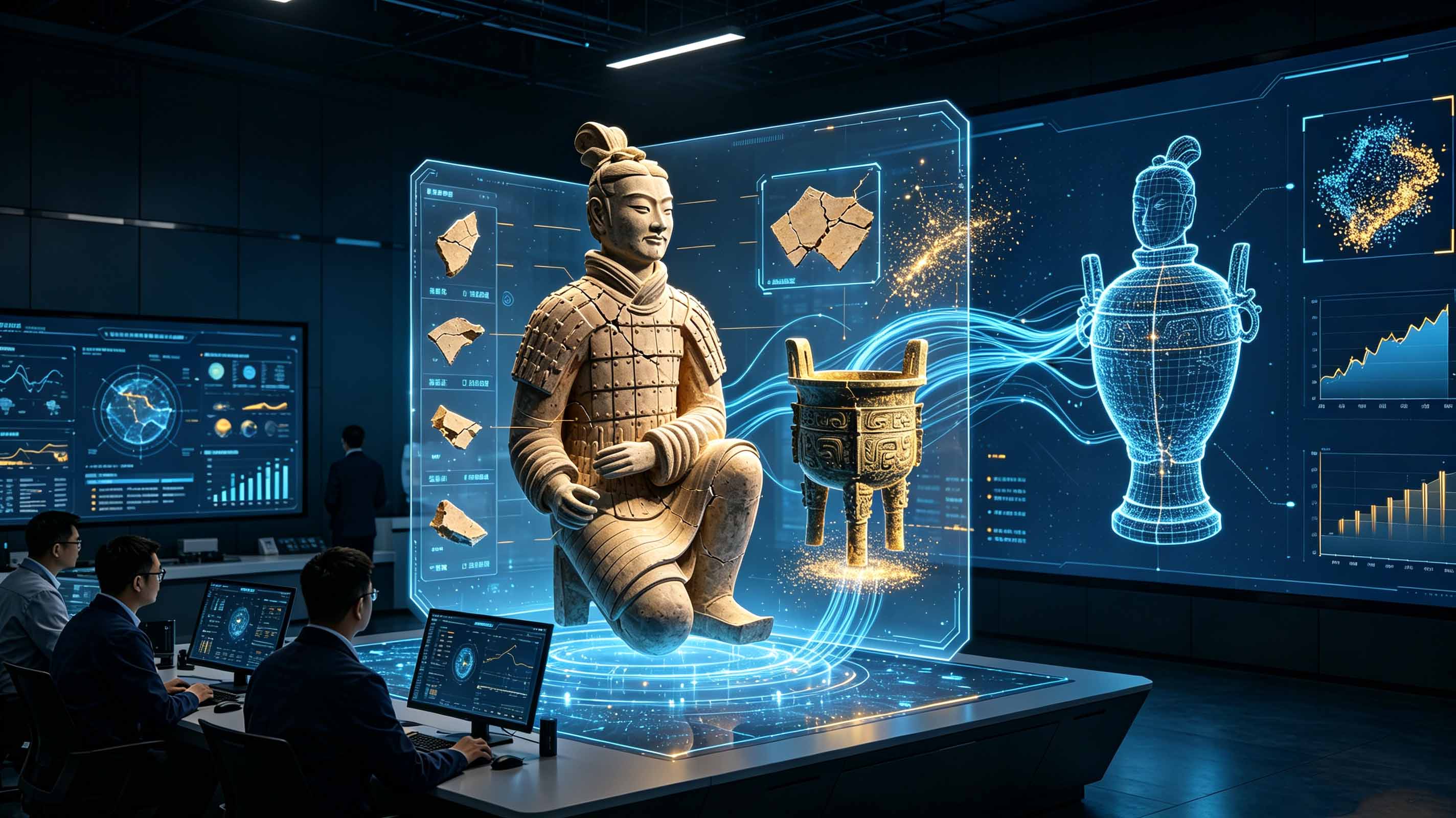 Digital twin solution for movable cultural relics
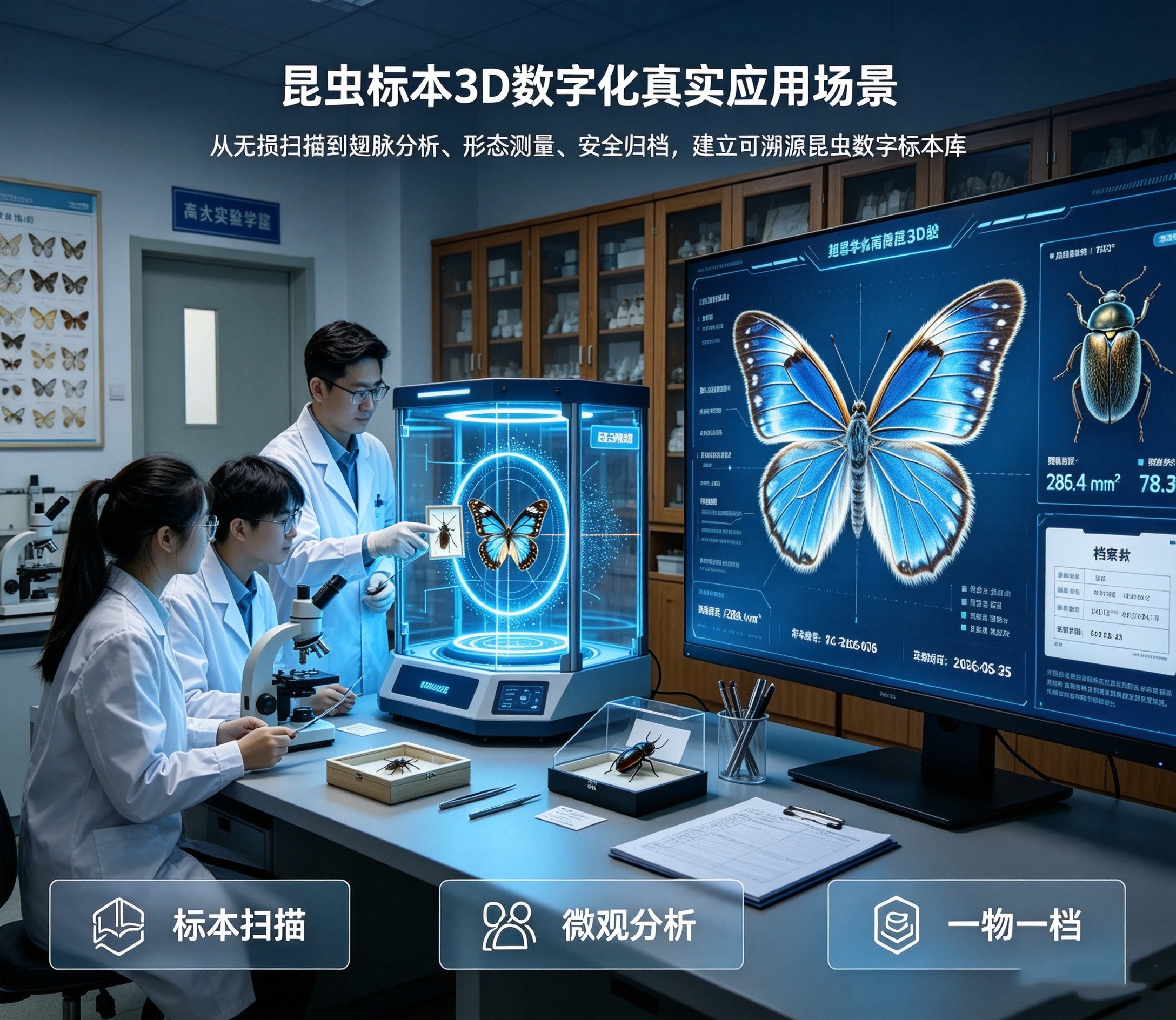 3D digitization scheme for insect specimens
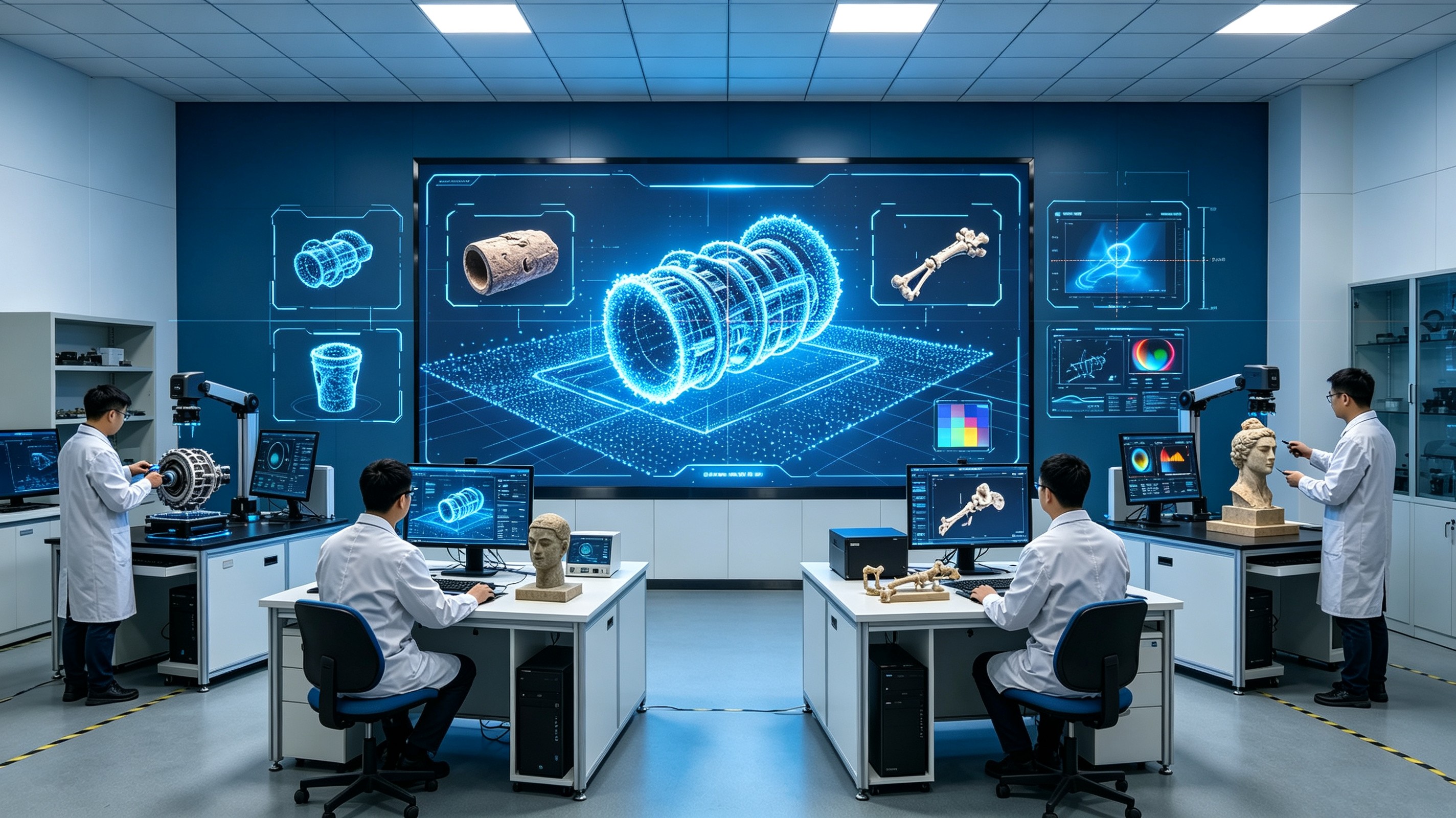 Digital twin solution for higher education research institutions
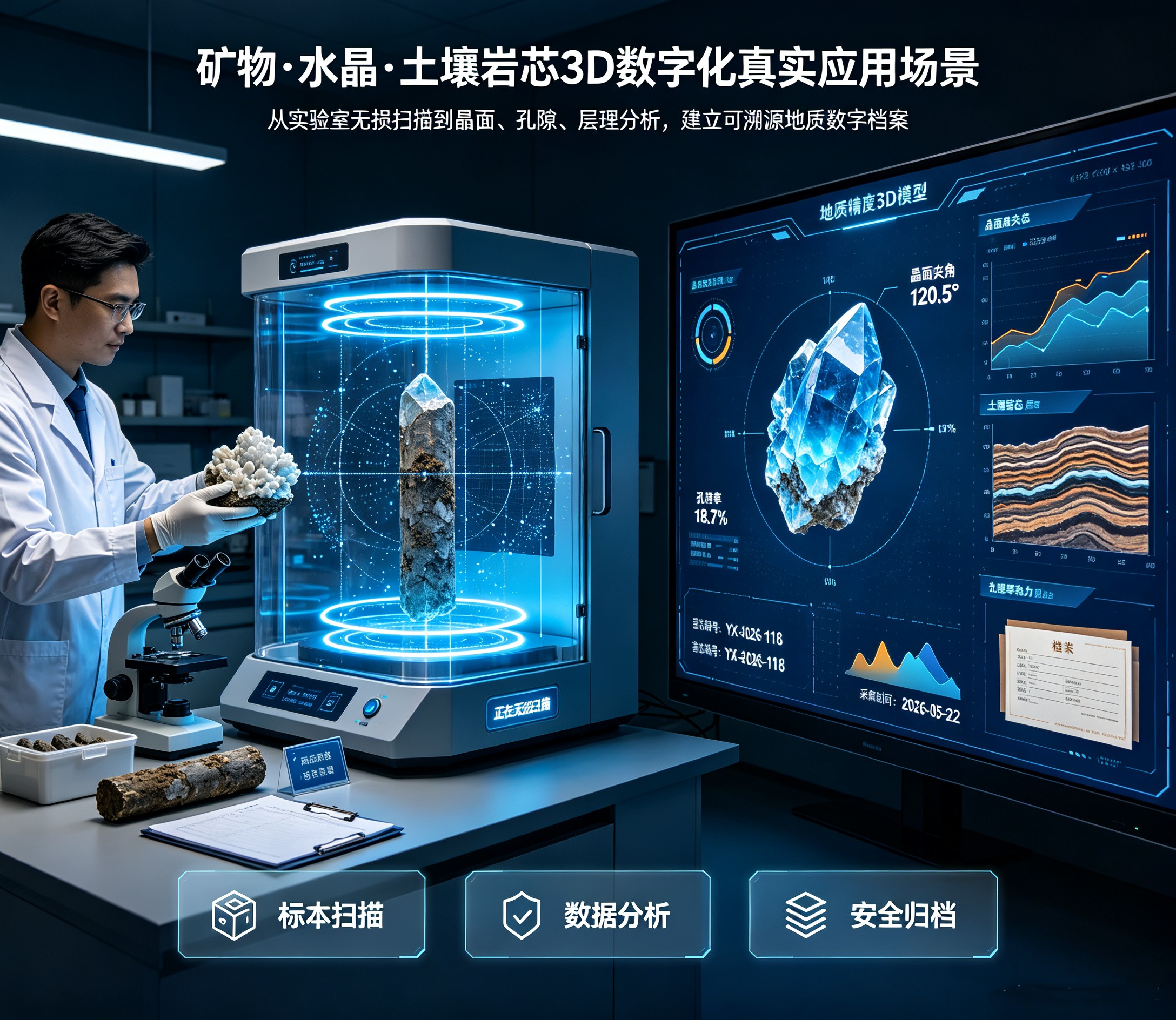 3D digital solution for ores
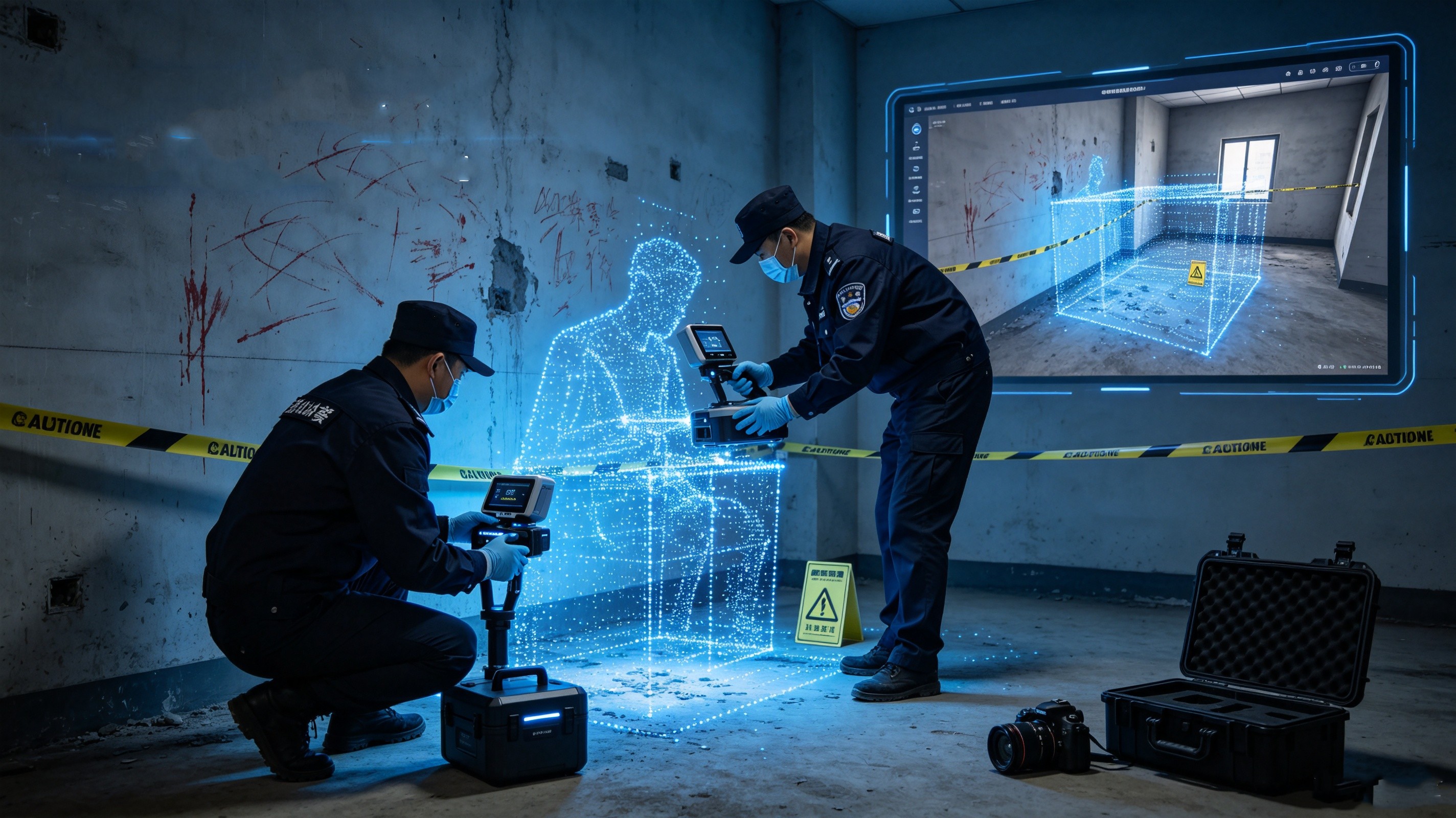 Overall Solution for 3D Digital Intelligence Construction of Public Security, Procuratorate and Court Authorities