Digital twin solution for higher education research institutions
Currently, top universities and key laboratories worldwide have adopted high-precision 3D scanning and Gaussian Splatting digital twins as standard basic research tools; universities in Europe, Japan, South Korea, Hong Kong, and Macao have generally established campus-wide 3D shared experimental platforms to support interdisciplinary frontier research, practical teaching, international joint projects, the global sharing of cultural relics and specimens.
Core positioning of the solution

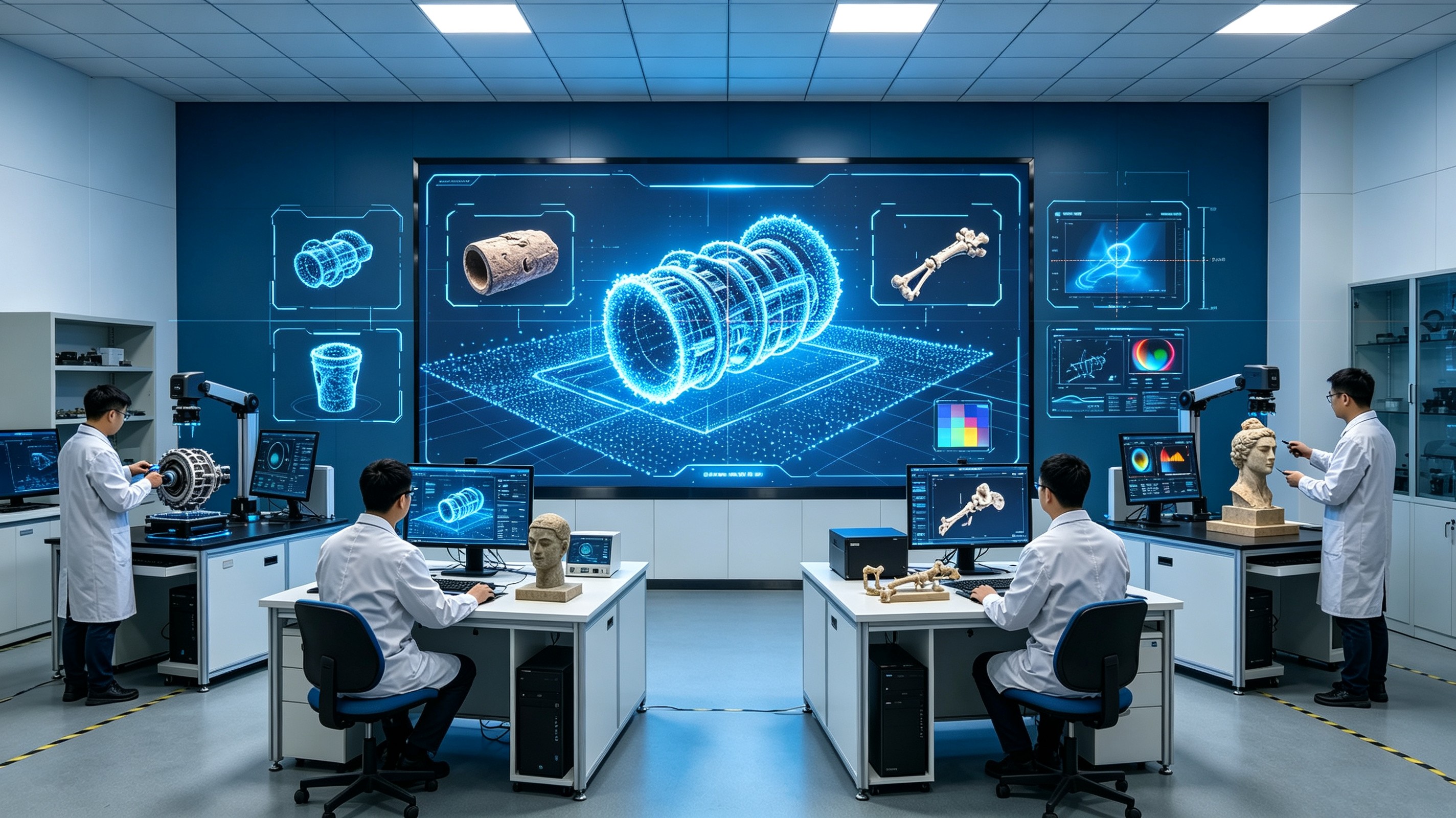
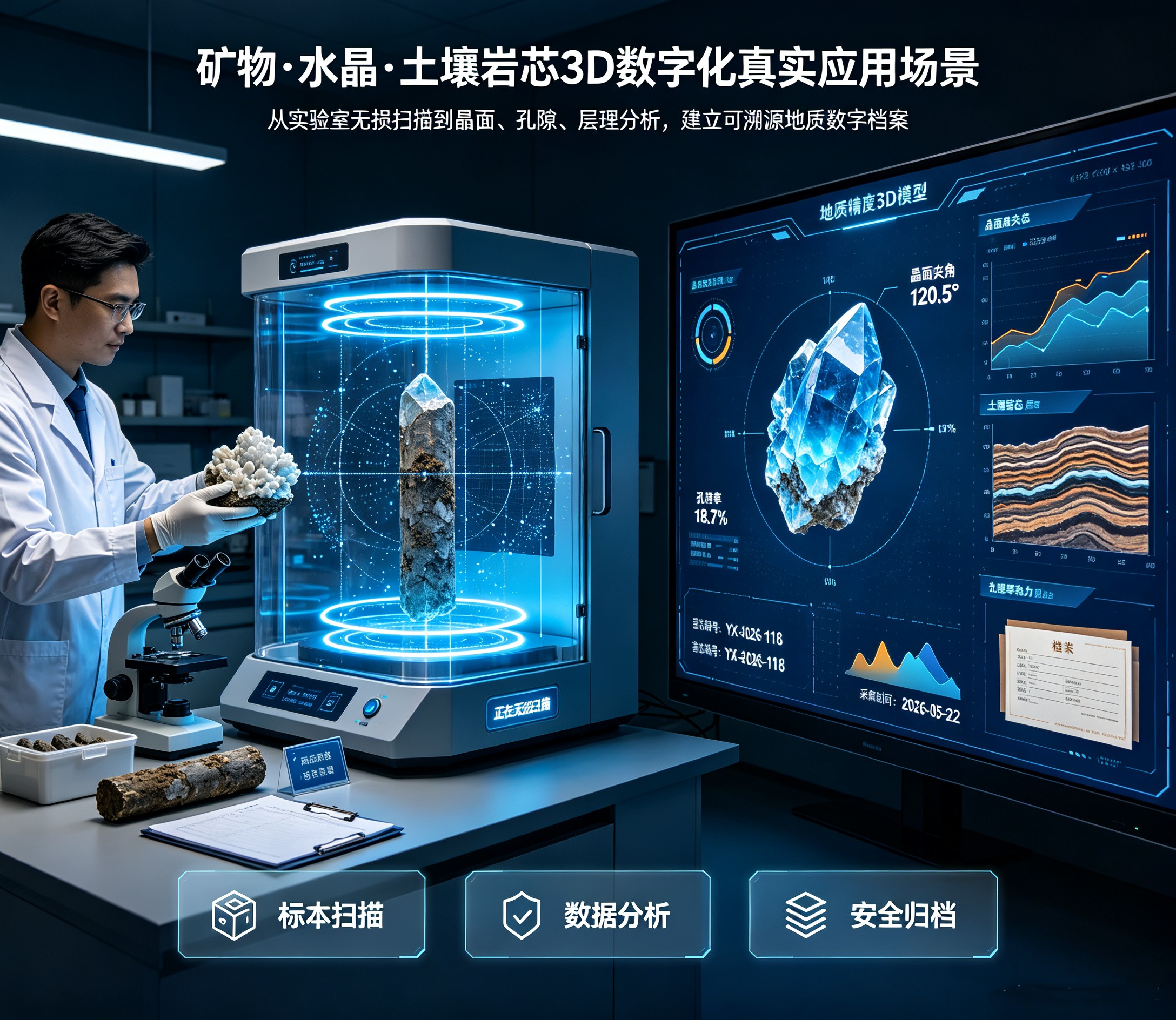
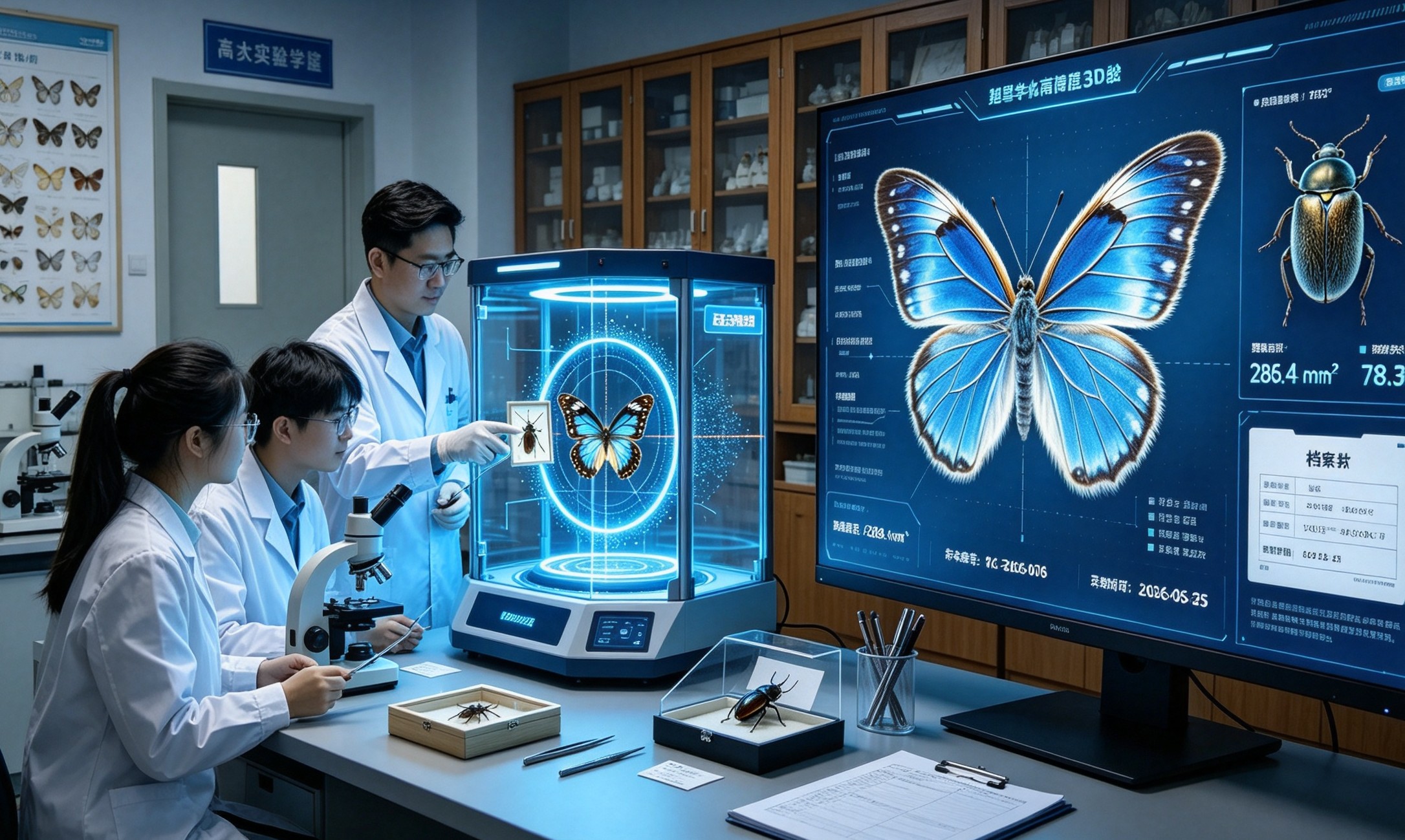
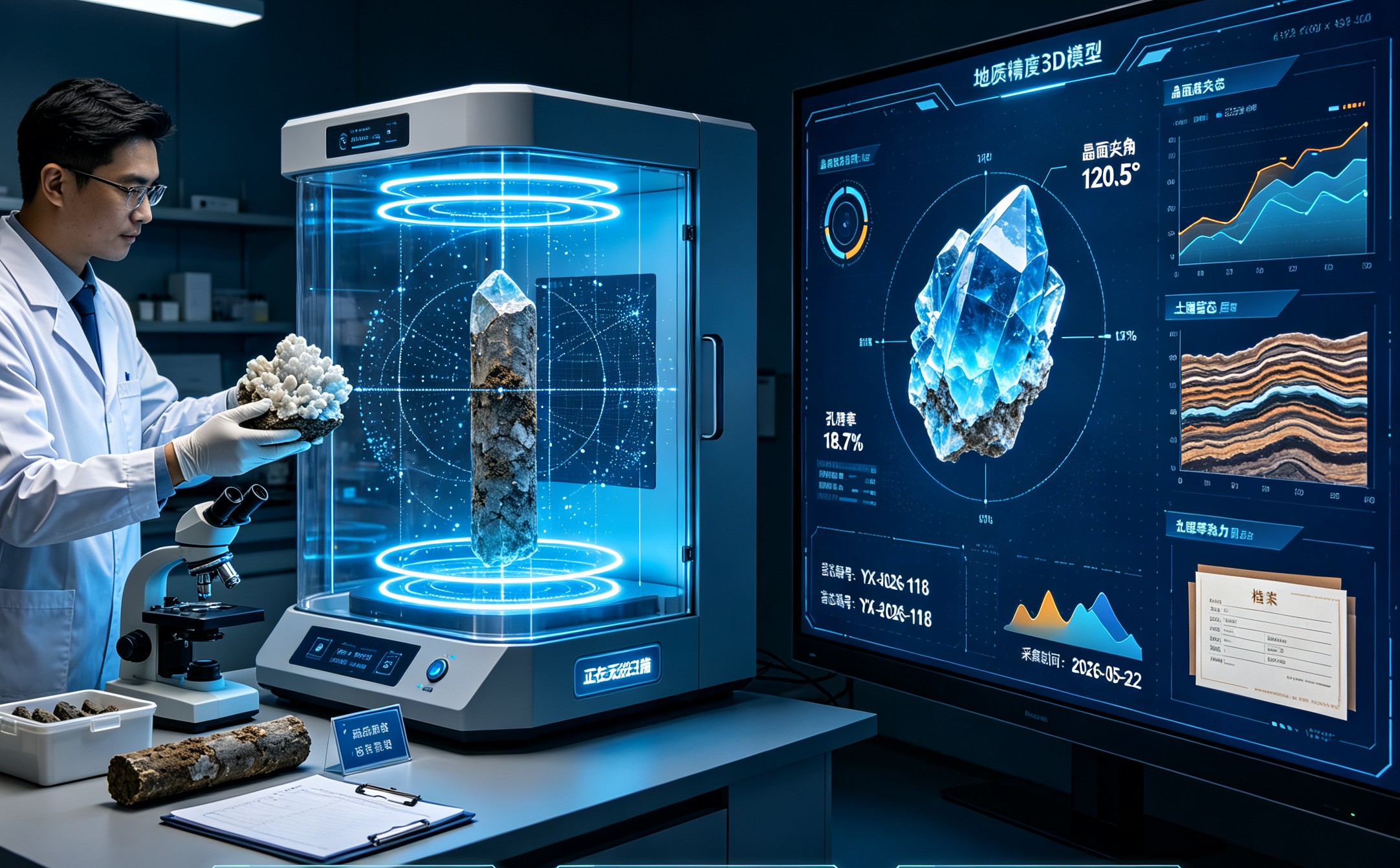
This solution targets comprehensive universities, polytechnic institutes, art academies, medical schools, and archaeological and cultural heritage research institutes, providing a complete integrated solution micron-level non-destructive 3D acquisition, AI-powered intelligent 3D analysis, a standardized globally interoperable digital asset library, and cross-campus remote collaboration. equipment is compatible with six core disciplines: materials science, mechanical engineering, archaeology, art, medicine, and biology. The outputs comply with CIDOC standards, international engineering 3D, and general medical imaging specifications, bridging the entire chain of on-campus teaching and research, global academic exchange, and achievement transformation. It addresses common pain points in higher education institutions as scattered multi-disciplinary scanning equipment, low modeling efficiency, data silos, and the inability to support international collaborative research.

Common pain points of global university research institutions

1. Equipment is scattered and single-purpose, with departments independently purchasing small scanners of varying precision. They cannot accommodate diverse samples such as micronscale specimens, precision components, human specimens, and fragile cultural relics, and scanning valuable samples easily causes contact damage;


2. Traditional 3D mesh models are bulky and lack lightweight technology, causing lag when teachers and students remotely access them or transmit them internationally, making it difficult to conduct cross-border online collaborative experiments;


3. There are no disciplinespecific universal AI analysis tools, so the annotation of part deformations, cultural relic pathologies, biological skeletal features, and sculpture textures relies entirely on manual labor. This leads to long scientific data processing and insufficient standardization of 3D illustrations in papers;


4. There is no unified storage system for 3D outputs, with data from experimental samples, archaeological specimens, and original drafts scattered across hard drives. The lack of a "one-item-one-file" traceability system fails to meet the requirements for university scientific research archives and international project data;


5. There is a lack of globally compatible data formats, meaning on-campus 3D models cannot interface with overseas universities' simulation, VR training, and 3 printing platforms, which limits international academic cooperation and the publication of joint research results.


Expanding Boundaries: Gaussian Splatting 3D World Model Interdisciplinary AI Analysis

Gaussian Splatting Lightweight Digital Twin:


With a volume only 20%-30% of traditional mesh models, it can loaded in seconds on PCs, tablets, and overseas terminals, natively adapting to VR training, remote online laboratories, and international online seminar exhibit displays; it supports time-series overlay of data over multiple years, automatically compares material deformation, cultural relic weathering, and biological specimen aging, and generates quantitative comparison reports;


Multi-disciplinary exclusive AI intelligent analysis engine, to mainstream research directions of global universities:

Mechanical / Materials: Automatically measures part wall thickness and deformation tolerances, identifies crack defects, outputs engineering-standard 3D drawings, and simulation modeling and 3D printing experiments;

Archaeology / Cultural Heritage: Virtually restores broken specimens, automatically annotates patterns and pathologies, and outputs metadata compliant with international CIDOC for global collaborative cultural heritage research;

Fine Arts / Sculpture: Fully preserves the texture and modeling layers of sculptures, with AI-assisted modeling comparison and replication deduction to support digital creation;

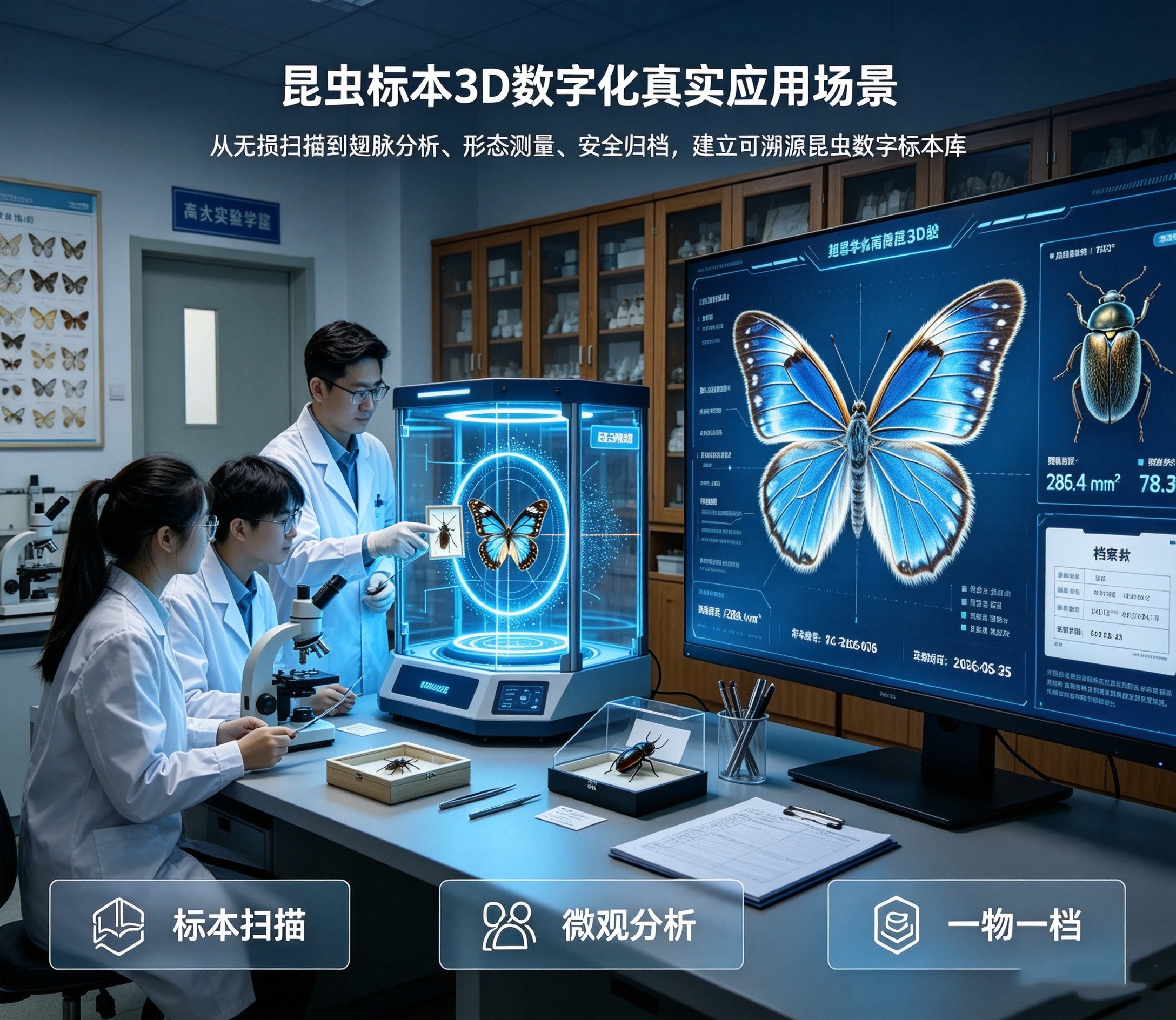
Medicine / Biology: Non-destructively captures the 3D contours of bones and biological specimens, quantifies dimensional features, and adapts to anatomical training and biological morphology;

Standardized multi-format export: One-click output of STEP, GLB, OBJ, and international cultural heritage universal data packages, compatible with overseas university simulation software, academic platforms, and 3D printing equipment, meeting the requirements for international journal illustrations and joint project data delivery.



Related Products
Leave a message for consultation
Welcome to share your information with us!
The information you provide will help us serve you better.
National High-tech Certification Enterprise
Intellectual Property Management System Certification
Member of the Chinese Museum Association
China's Compulsory Quality Certification 3C