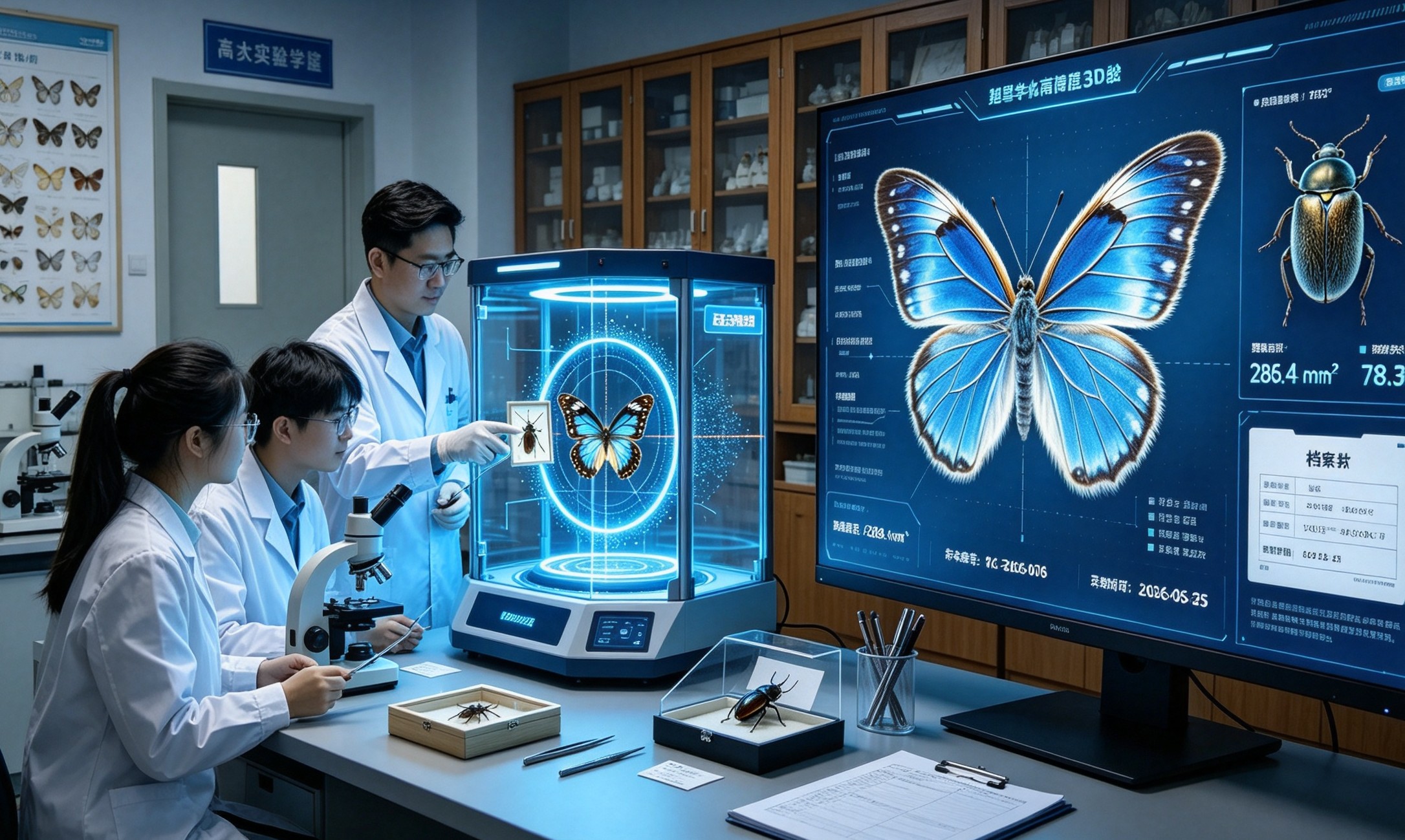
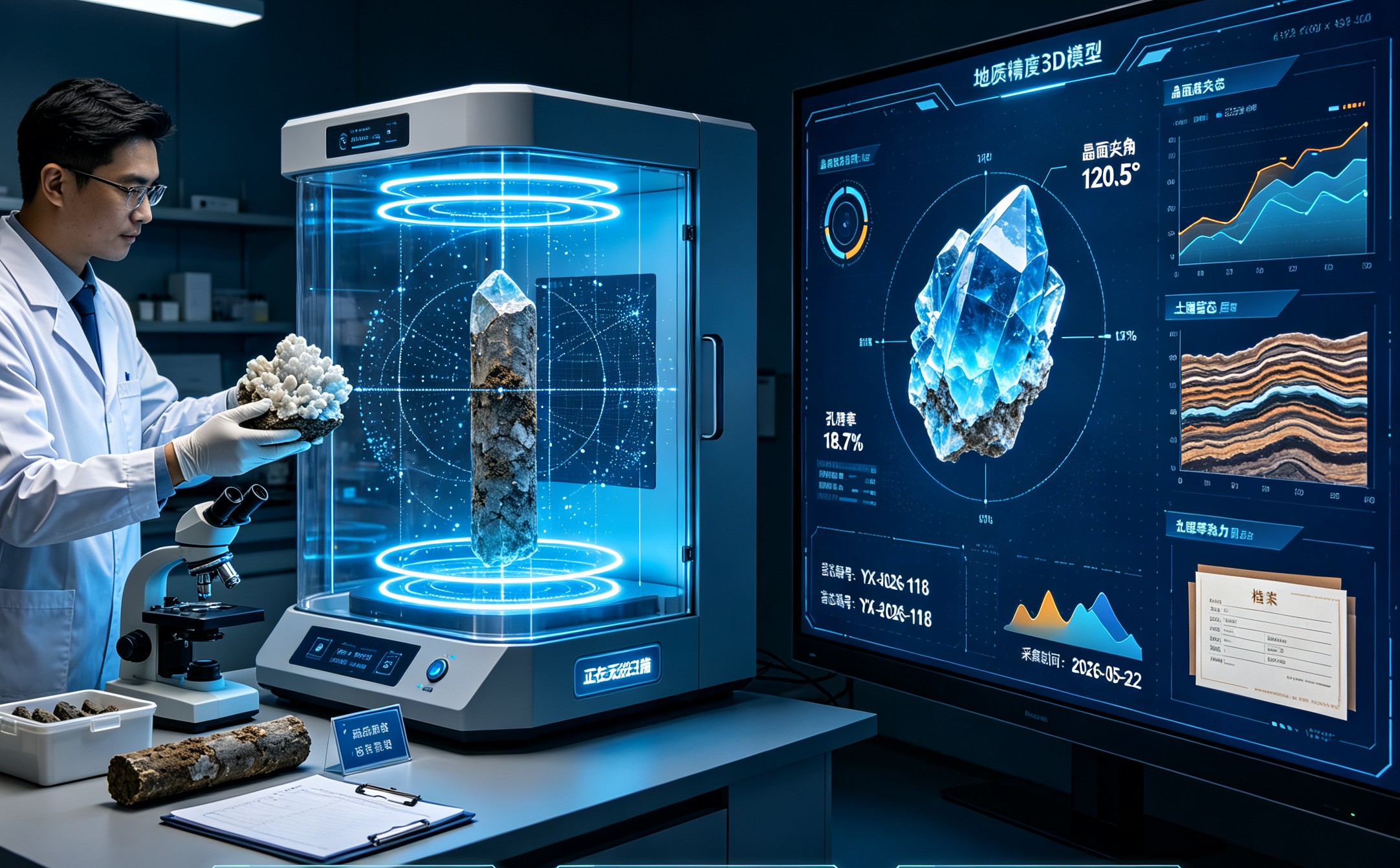
3D digitization scheme for insect specimens
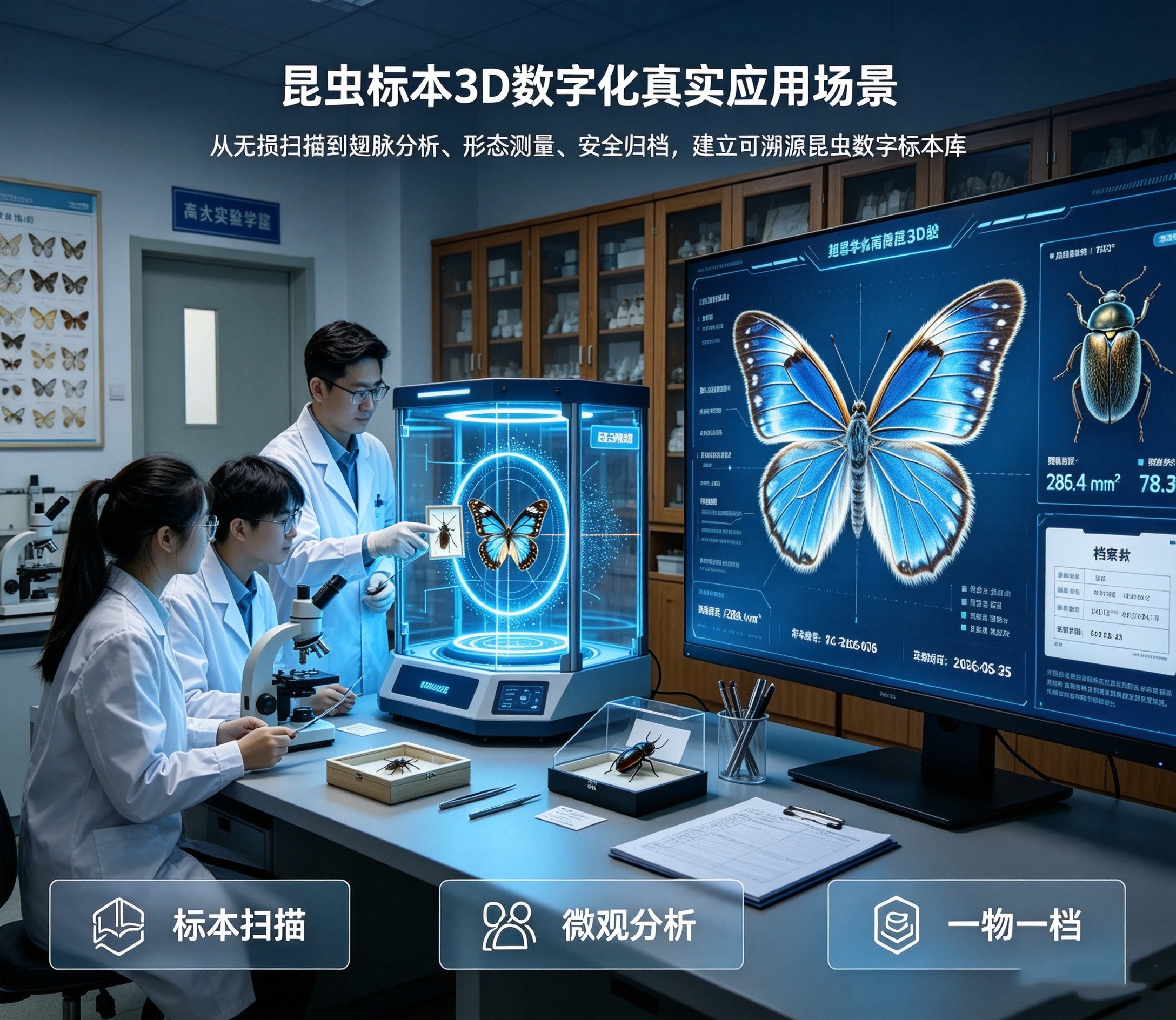
Build a full-link digital system of "fully automated lossless 3D scanning and collection insect-specific AI microscopic data analysis one-item--file secure archiving and storage". This solution is designed for university insect laboratories, insect taxonomy research institutes, biological specimen museums, and agricultural and forestry plant protection units, addressing the characteristics of insect specimens being extremely thin, extremely fragile, having complex microscopic structures, being easily damaged, difficult to measure, and difficult to preserve.
Industry background

This solution is designed for university insect laboratories, insect taxonomy research institutes, biological specimen museums, and agricultural and forestry plant protection units. Based on the characteristics of insect specimens—being extremely thin, extremely fragile, having complex microscopic structures, being easily damaged, difficult to measure, and hard to preserve—it creates a full-link digital of "fully automated non-destructive 3D scanning and collection   insect-specific AI microscopic data analysis   one-specimen-one-file secure archiving and storage".


 completely solves the operational drawbacks of traditional 2D photography, manual microscope observation, and handheld scanning modeling, aligning with the actual workflow needs of insect scientific research and taxonomy, teaching and training museum collection, and species conservation, thereby achieving the upgrade of insect specimen digitization from "image preservation" to "quantifiable scientific research assets".


Tuojie Cloud Map fully automated lossless scanning implementation solution

Insect specimens are one of the most difficult categories to preserve among biological specimens. Traditional digitization methods face numerous unavoidable practical issues:


• Specimens are extremely prone damage and loss: Butterfly wings, legs, antennae, and hairs are extremely thin and fragile. Manual handheld scanning and repeated flipping/positioning easily lead to broken legs, folded wings, loss, and scale abrasion. Once rare type specimens are damaged, they cannot be restored.


• Microscopic structures are completely missing: Ordinary photography and simple scanning can only record planar, failing to capture core microscopic taxonomic features such as wing vein textures, scale arrangements on wing surfaces, body setae, compound eye structures, and joint angles, resulting in a severe lack scientific research data.


• Extremely high operational threshold and extremely low efficiency: Insects are tiny with complex hollow structures and numerous blind spots. Traditional modeling requires professionals to manually fill gaps, models point-by-point, and apply fine textures. A single specimen takes hours, making batch archiving completely unfeasible.


• Auxiliary consumables damage specimens: For tiny, transparent, or insect specimens, traditional equipment requires spraying developers, which covers the original microscopic textures and corrodes the specimen surface, completely destroying its scientific research and identification value


Tuojie Cloud Map fully automated lossless scanning implementation solution

Customized miniature high-precision scanning workstation specifically for insect specimens, fully adapted to daily laboratory workflows, ready for immediate use by personnel with prior experience, ensuring zero damage to specimens throughout the entire process.


• Micron-level non-destructive macro acquisition: Equipped with an insect-exclusive macro optical module and a multispectral-light closed-loop illumination system, it requires no spraying of any developing agents and no flipping of specimens. This non-contact acquisition fully restores micron-level microscopic details such as wingation, scale arrangement, body surface hairs, and insect joints, completely preserving the original morphological characteristics of the specimens.


• Fully automated operation with zero manual intervention: The exclusive flexible antivibration specimen holder can steadily fix various thin, lightweight, and tiny insect specimens, preventing any squeezing or bumping. With a one-click start for fully automated scanning, the autonomously completes multi-angle layered imaging and full-coverage acquisition of blind spots, requiring no personnel supervision throughout the process, with a single specimen taking only 5–15 minutes


• Precise adaptation to complex structures: For complex structures such as hollow insect bodies, slender antennae, curved thin wings, and tiny insect legs, it automatically adjusts the shooting focus and angle, solving the problems of missed scans, blurring, and missing details in traditional equipment, and adapting to the full-category acquisition of butterflies, beetles, flying insects, miniature insects, and rare specimens.


• Batch digitization capability: Supports 24/7 continuous batch scanning, perfectly adapting to the needs of large-scale specimen census and archiving in laboratories, as well as construction of species resource databases, significantly shortening the cycle of digitization projects.


Related Products
Leave a message for consultation
Welcome to share your information with us!
The information you provide will help us serve you better.
National High-tech Certification Enterprise
Intellectual Property Management System Certification
Member of the Chinese Museum Association
China's Compulsory Quality Certification 3C